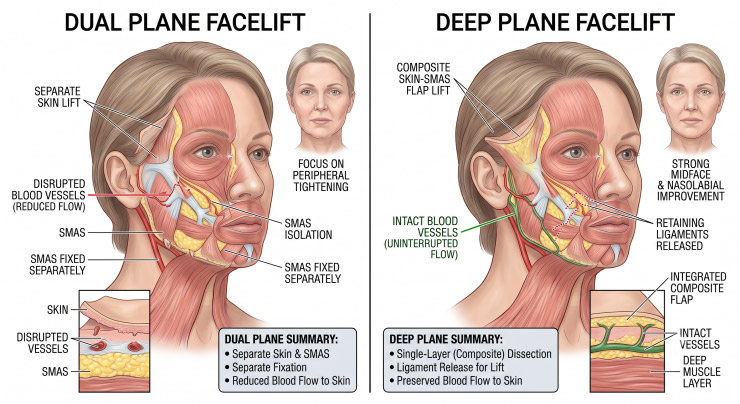
Why Does Your Face Look Longer With Age? 4 Anatomical Reasons
Hello, I’m Dr. Taehun Kim, a specialist who has focused on facelift surgery for 30 years.
Have you ever looked in the mirror and wondered, “Why does my face look longer than it used to?”
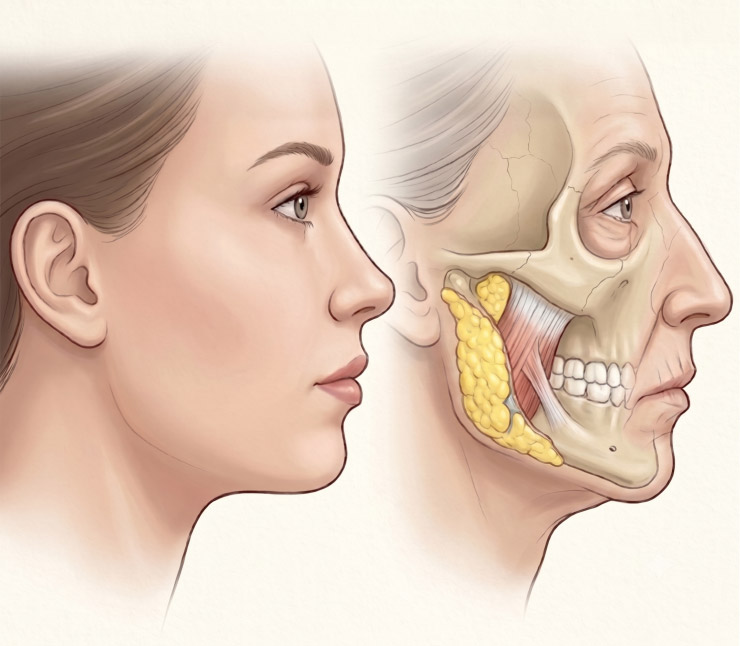
It can be tempting to dismiss the change as your imagination or assume it is simply the result of weight loss. However, a face that looks longer with age often reflects changes beneath the skin, including changes in bone support, facial fat, and the tissues that hold the face in place.
These changes can make the cheeks appear less full and the lower face look heavier or more elongated. This does not necessarily mean that the entire face has physically increased in length.
Let’s explore four anatomical reasons behind this change in appearance.
1. Facial Bone Loss Reduces Structural Support
The facial skeleton provides a foundation for the skin and soft tissues above it. With age, certain areas of this foundation undergo remodeling, including bone resorption—the gradual breakdown and removal of bone tissue.
These changes occur selectively; the facial skeleton does not simply shrink evenly. Reduced projection in parts of the upper jaw, for example, can diminish support around the nose and upper lip.
Think of it as a building whose supporting framework changes over time. As the underlying support changes, the contours of the overlying tissues can change too.
2. Retaining Ligaments Help Shape Folds and Jowls
Facial retaining ligaments are bands of connective tissue that anchor soft tissues to deeper structures. They help maintain the contours of the cheeks and jawline.
A tent provides a useful, simplified analogy: its fabric represents the soft tissues, while its fixed supports represent areas of attachment.
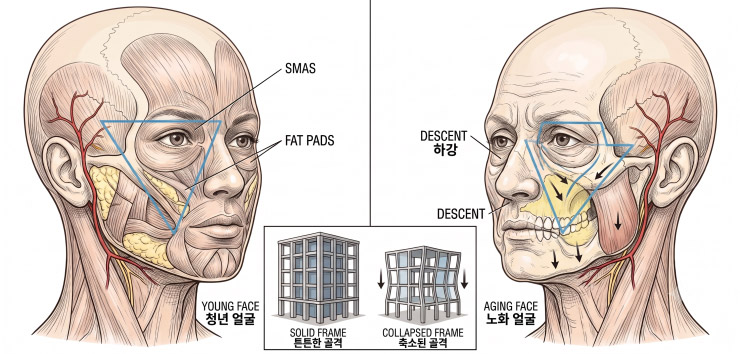
As the tissues lose elasticity and their volume and position change, some areas become more prominent or sag relative to neighboring attachment points. This can make folds and contour differences more noticeable.
Common changes include:
- Nasolabial folds: Lines running from the sides of the nose toward the corners of the mouth.
- Marionette lines: Lines extending downward from the corners of the mouth.
- Jowls: Sagging soft tissue along the lower jawline.
The “tent pole” comparison is an illustration, rather than a complete explanation. These features involve several tissue layers and cannot be attributed to ligaments alone.
3. Changes in Facial Fat Alter the Balance of the Face
Facial fat is arranged in separate compartments that contribute to fullness and contour. These compartments do not all age in the same way.
Some lose volume, while others become more prominent or change position as surrounding support changes. This can create a combination of hollowing in the upper or middle face and increased heaviness around the lower cheeks and jawline.
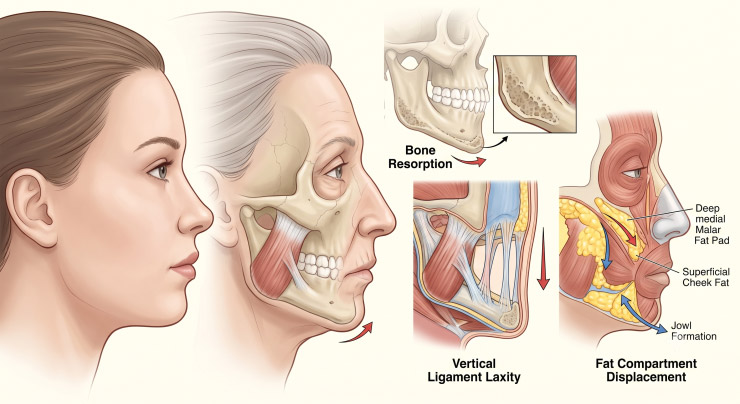
You may notice:
- Less fullness in the temples or cheeks.
- More pronounced hollows and folds.
- A less defined jawline.
It is not simply a matter of all the fat from the upper face sliding downward. Volume loss and changes in tissue position can occur together, altering facial proportions and making the lower face look longer or heavier.
4. Upper Lip Lengthening and Thinning Change Facial Proportions
Aging also affects the area between the nose and mouth.
The skin-covered portion of the upper lip can lengthen, while the visible pink portion becomes thinner and less defined. The philtrum—the central groove between the nose and upper lip—may also become less distinct.
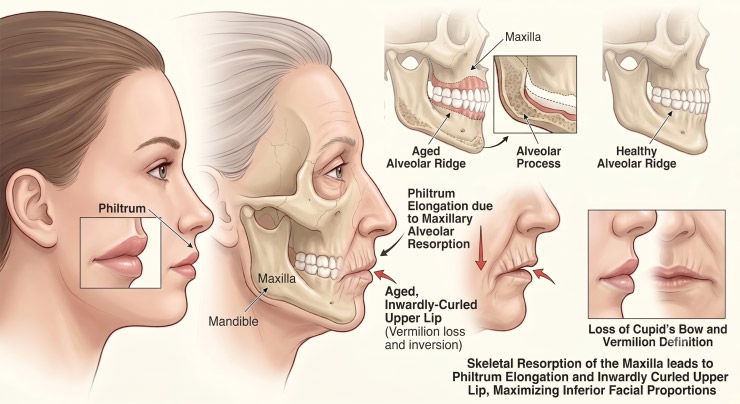
Changes in the underlying upper jaw can contribute, alongside changes in the lip’s skin and soft tissues.
Together, a longer upper lip and reduced visible lip volume can make the area around the mouth appear more elongated.
Why an Individual Assessment Matters
A face that looks longer with age usually reflects several changes working together:
- Changes in facial bone support.
- Changes in soft-tissue support and contour.
- Facial fat loss and redistribution.
- Upper lip lengthening and thinning.
Because these changes involve multiple anatomical layers, addressing skin laxity alone may not address every concern.
If you are concerned about changes in your facial proportions, an assessment by a qualified specialist with expertise in facial anatomy can help identify which structures are involved and whether treatment is appropriate.
Understanding the cause is the first step toward choosing an approach suited to your face and your goals.

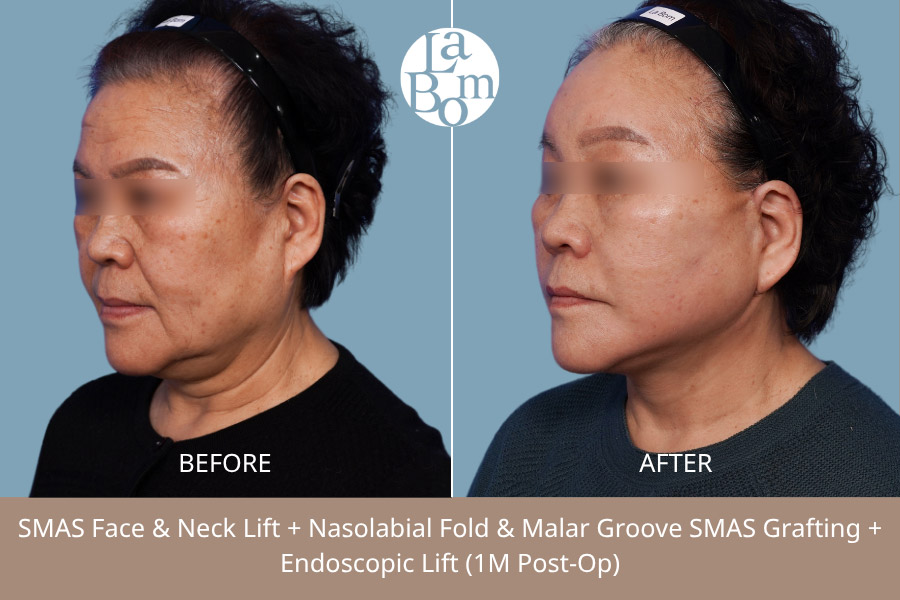
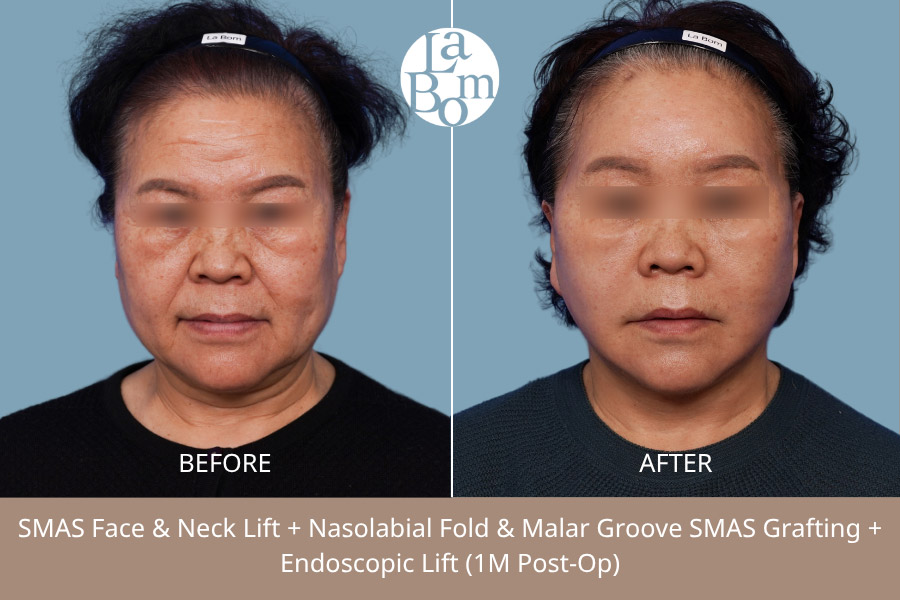
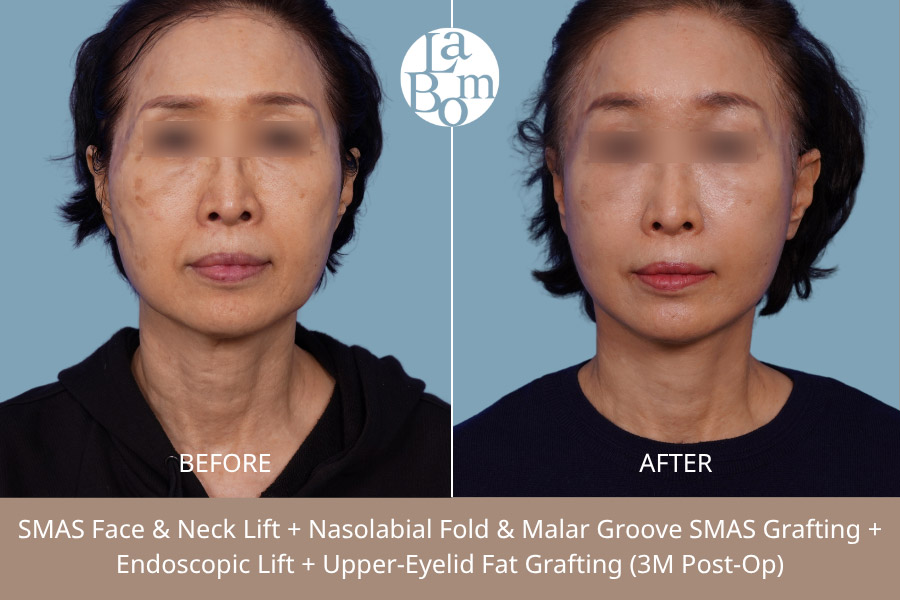
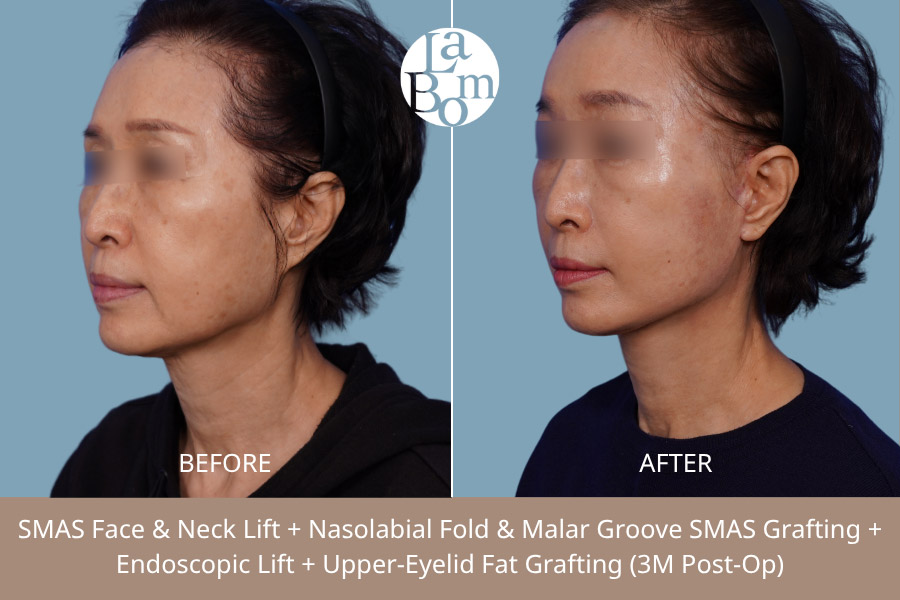
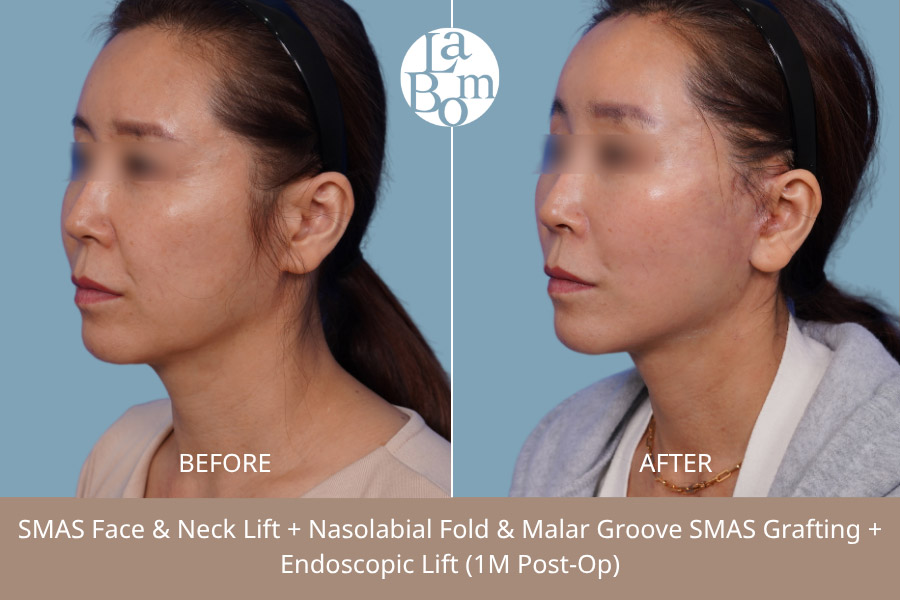
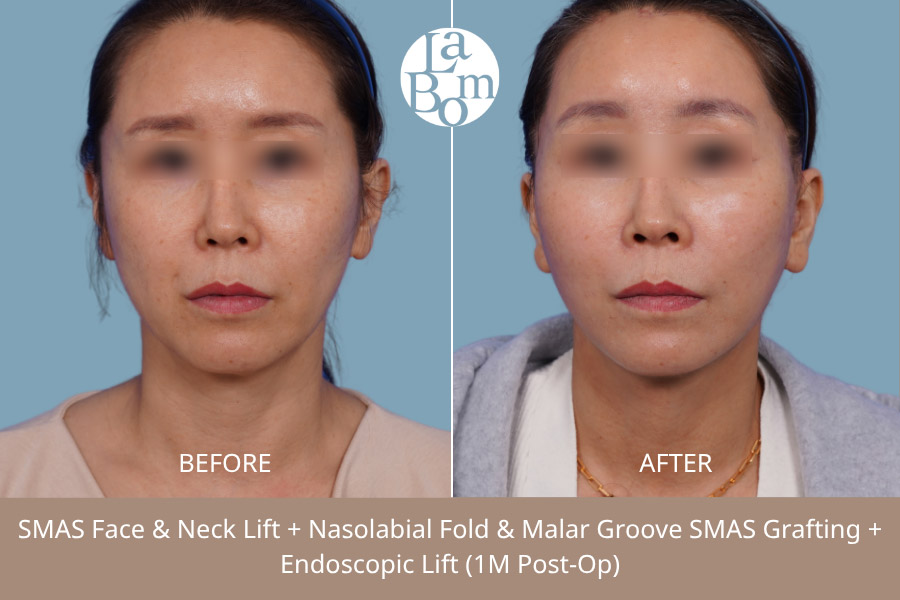
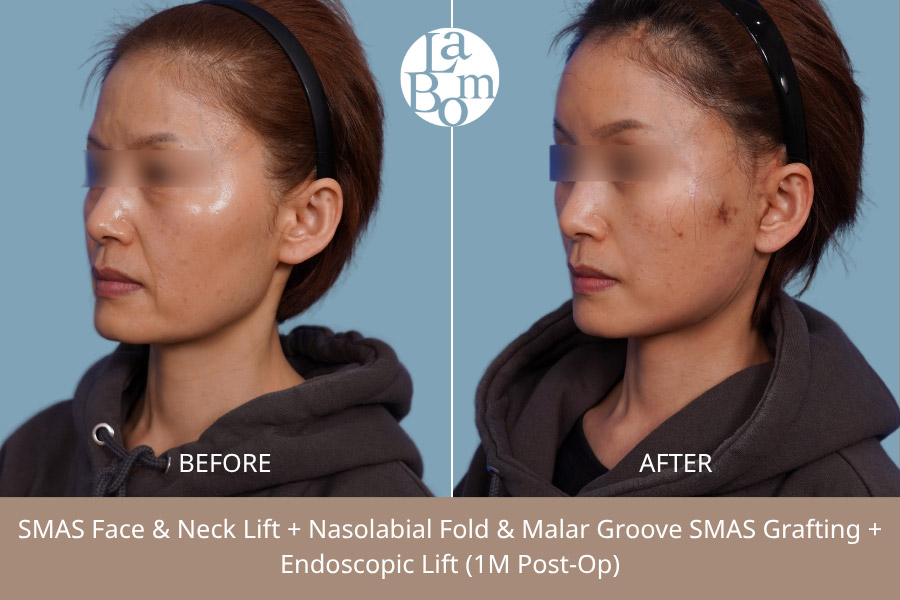
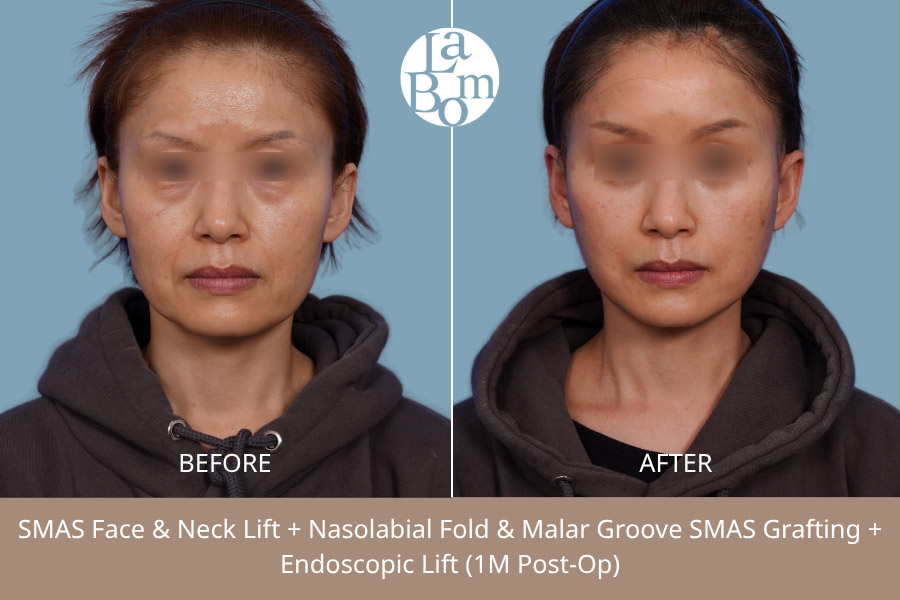
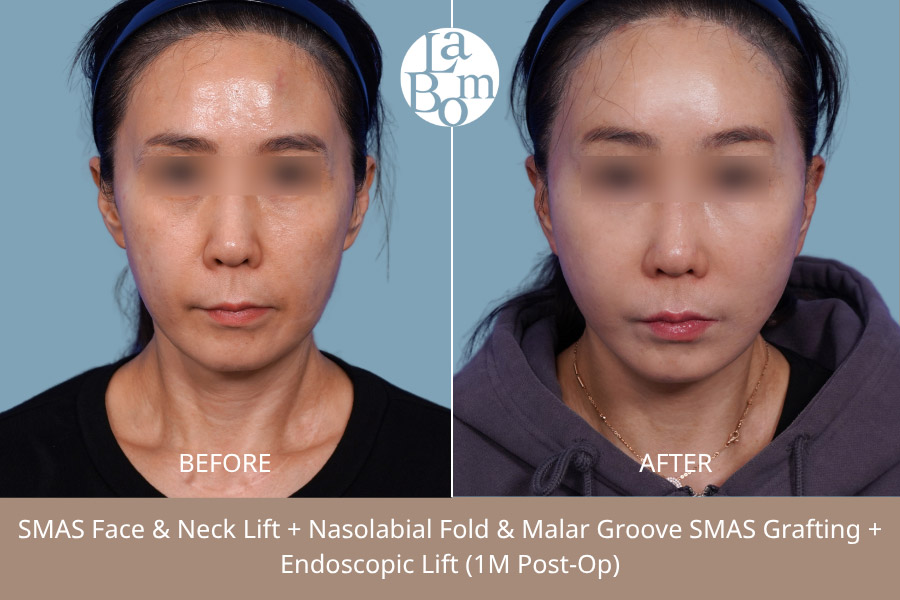
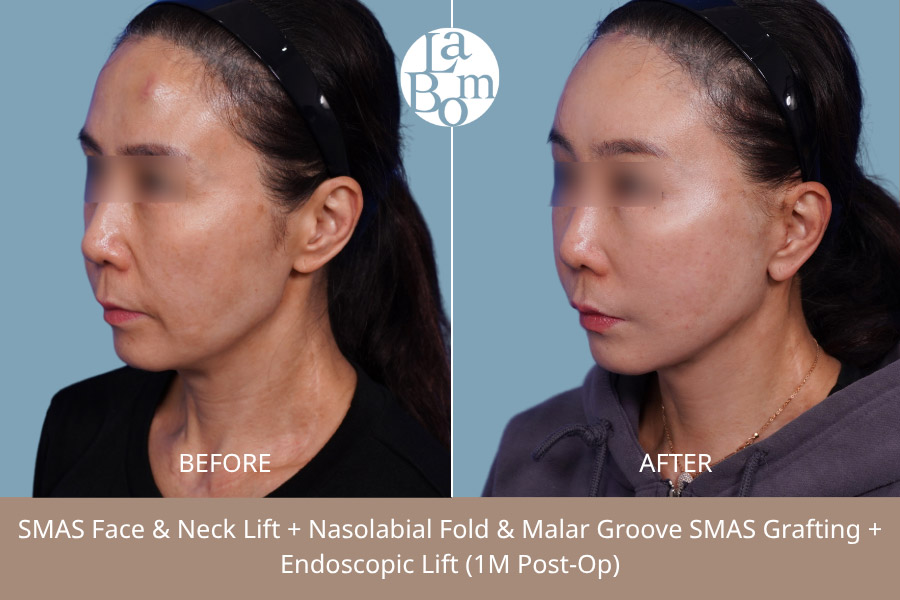
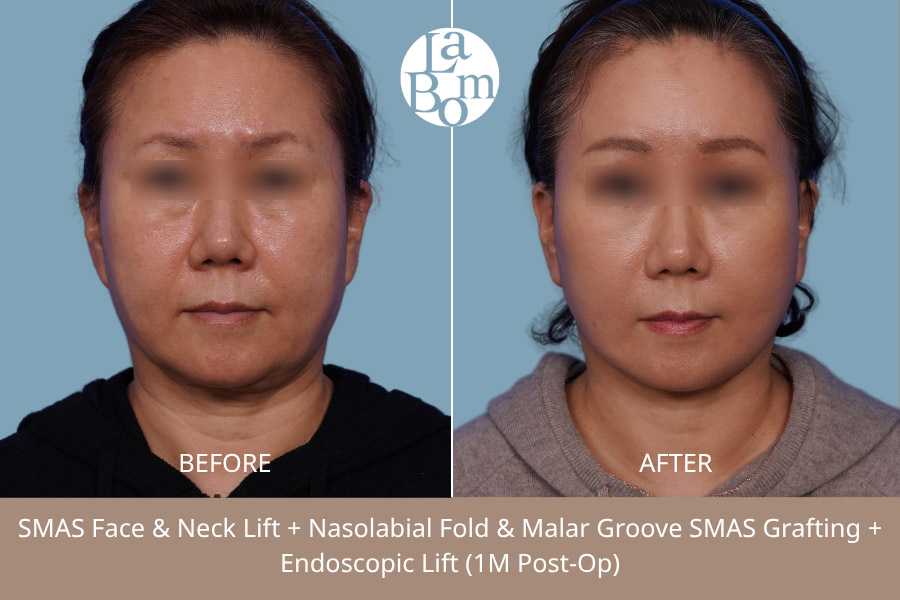
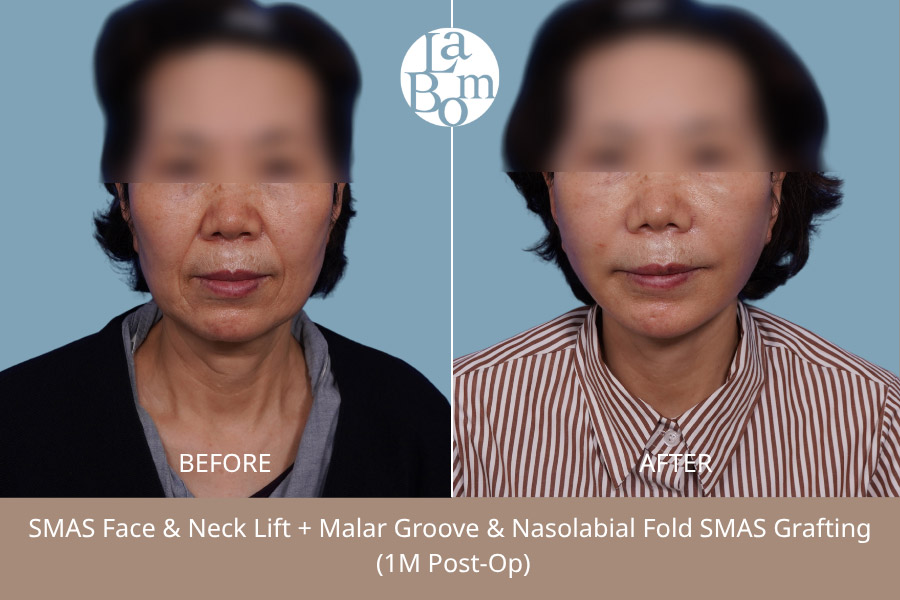
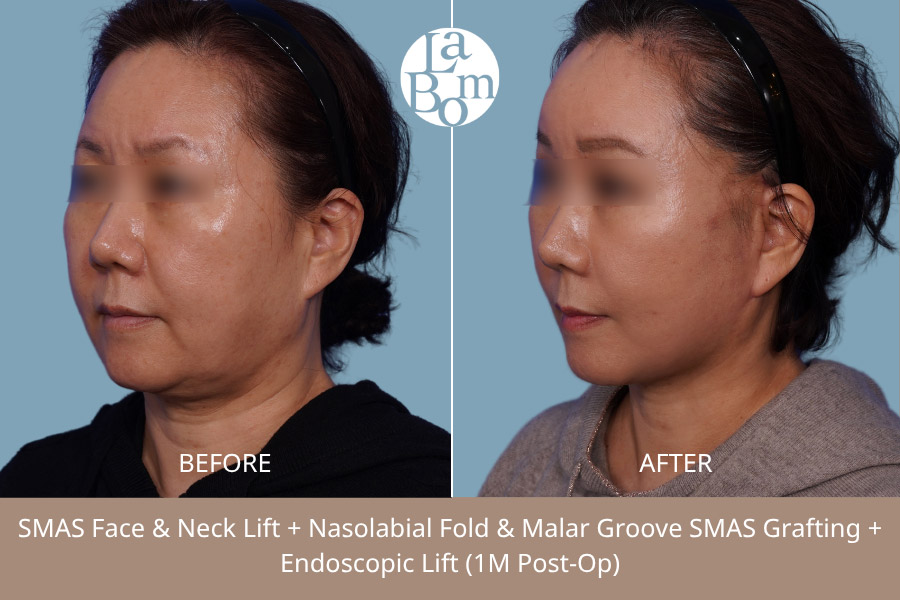
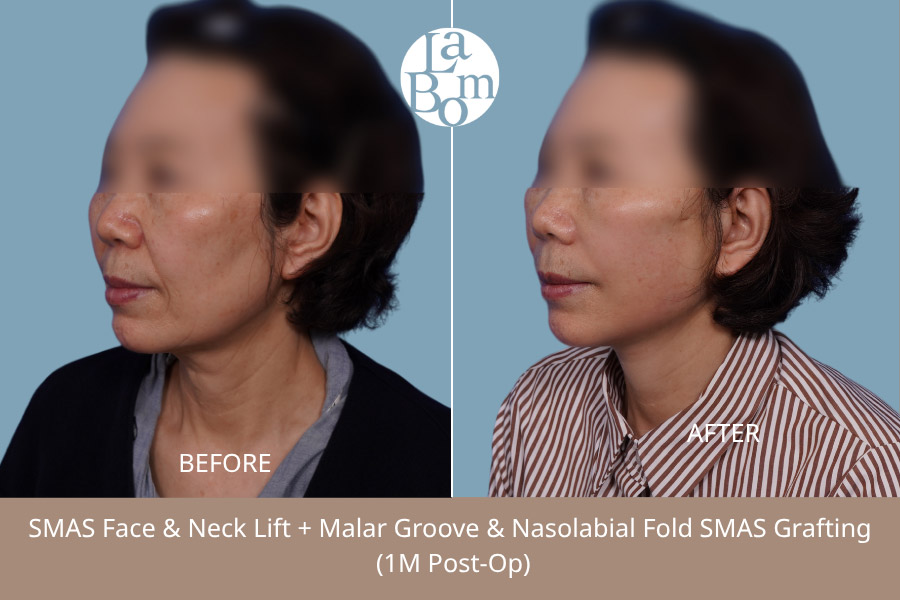
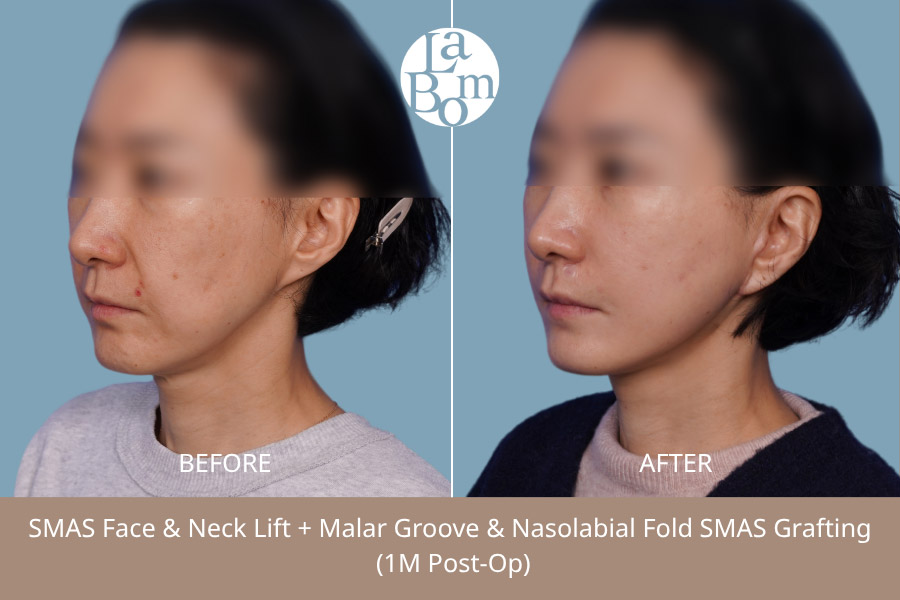
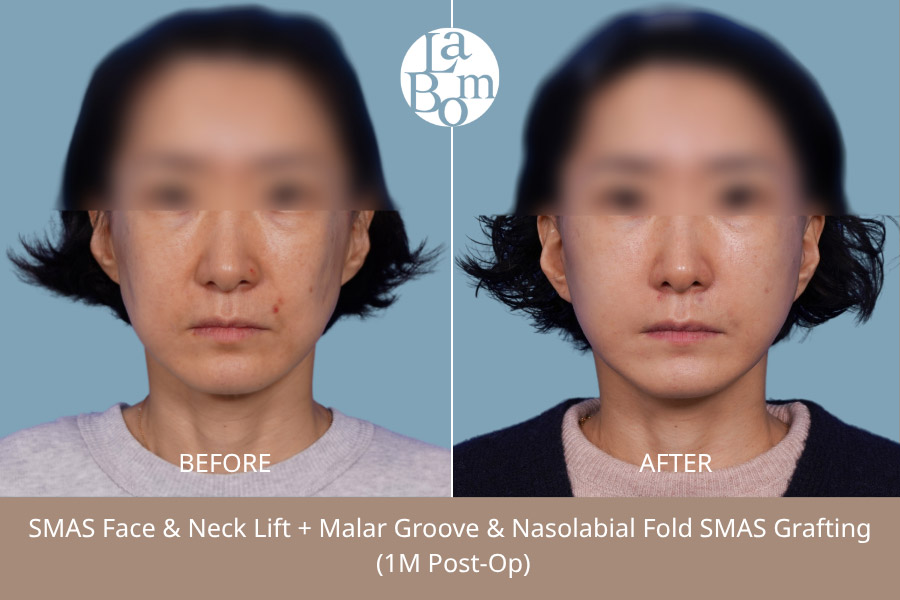
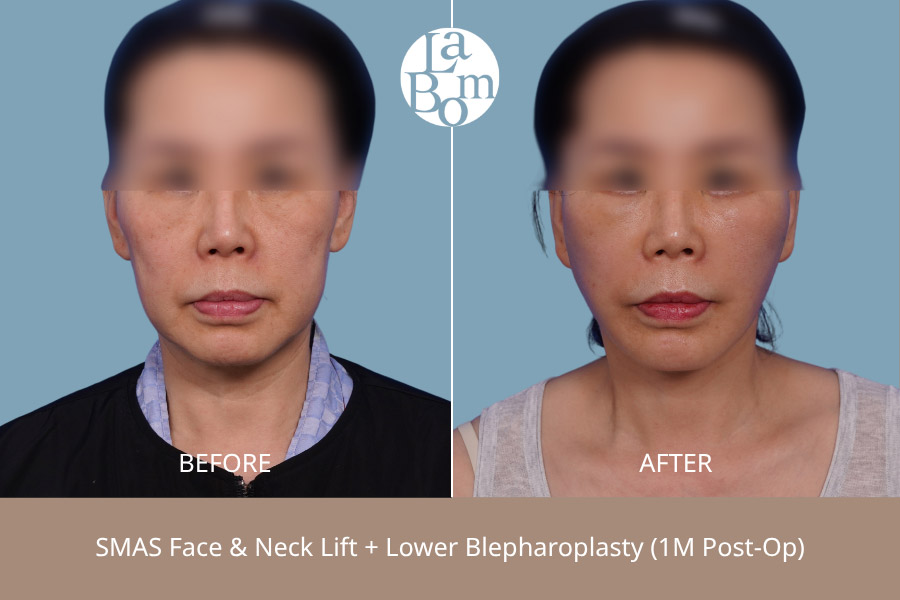
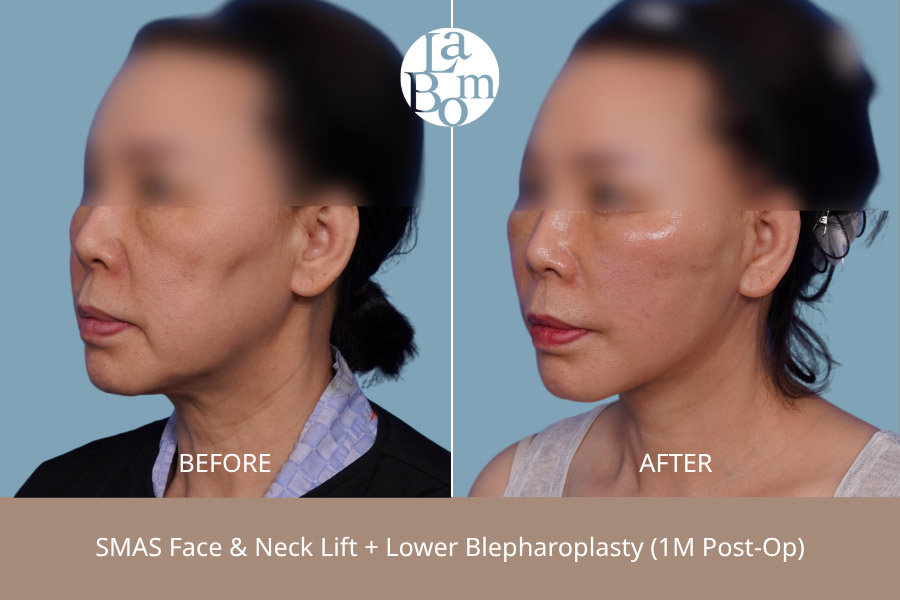
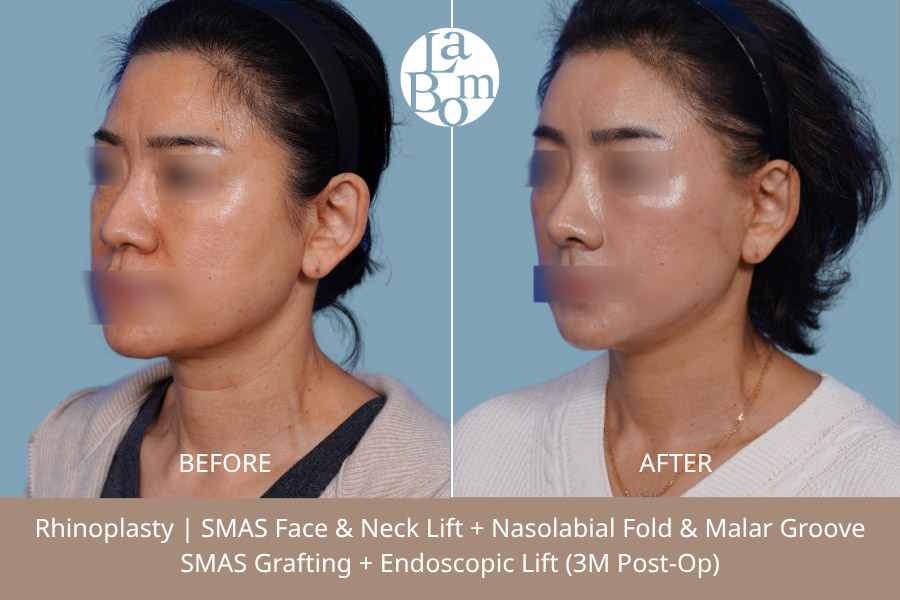
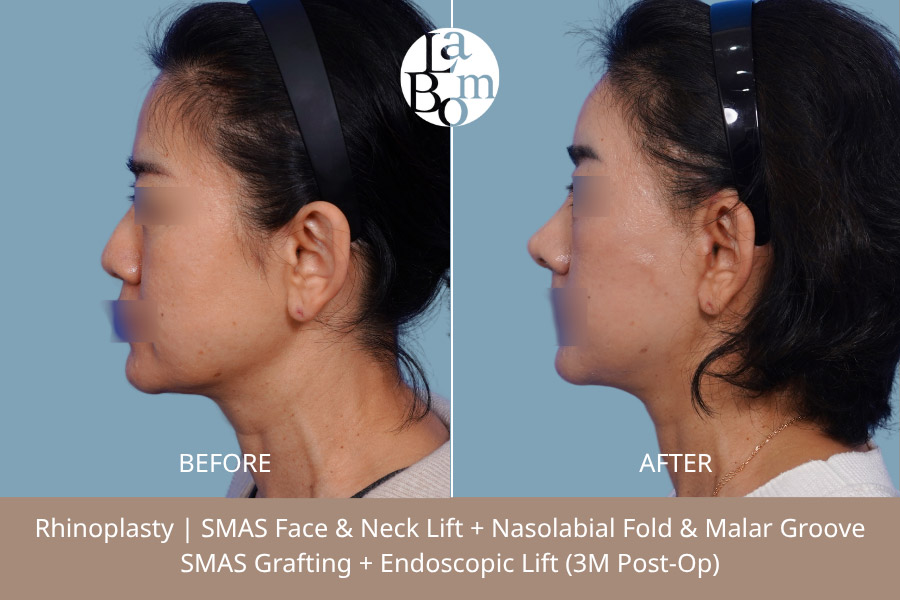
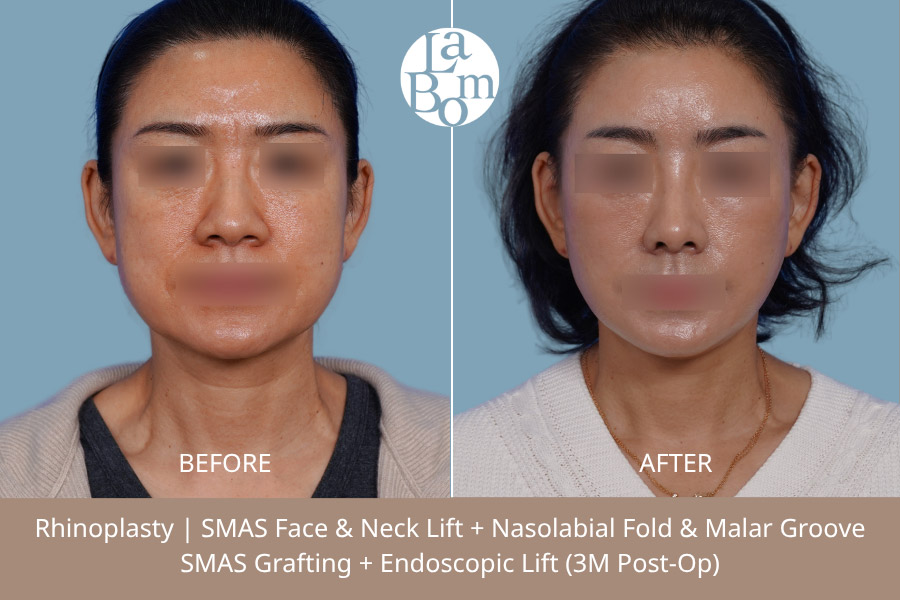
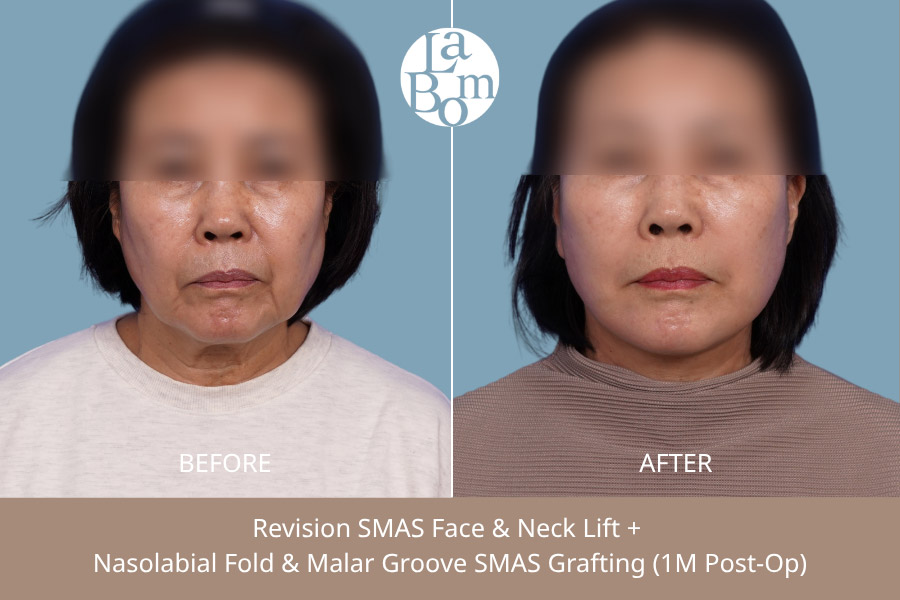
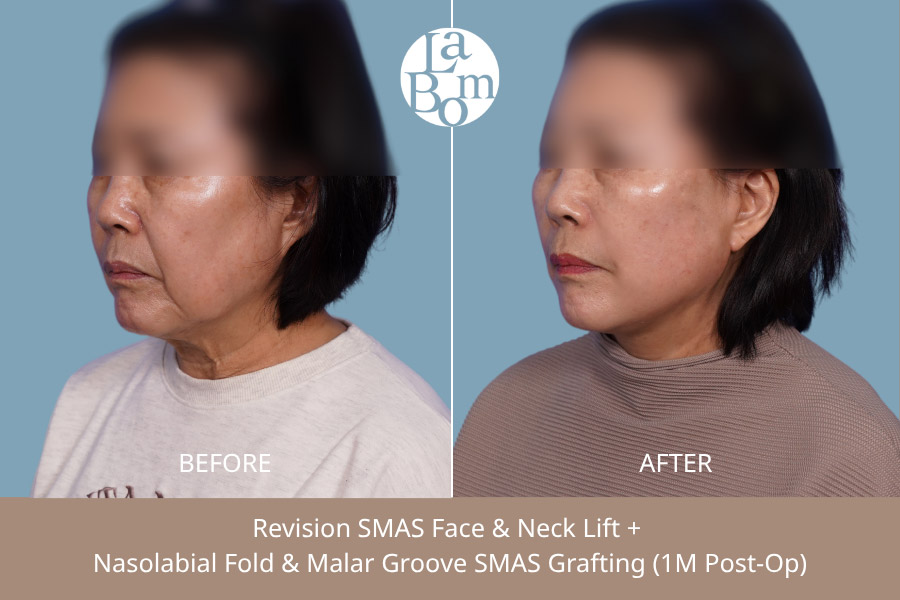
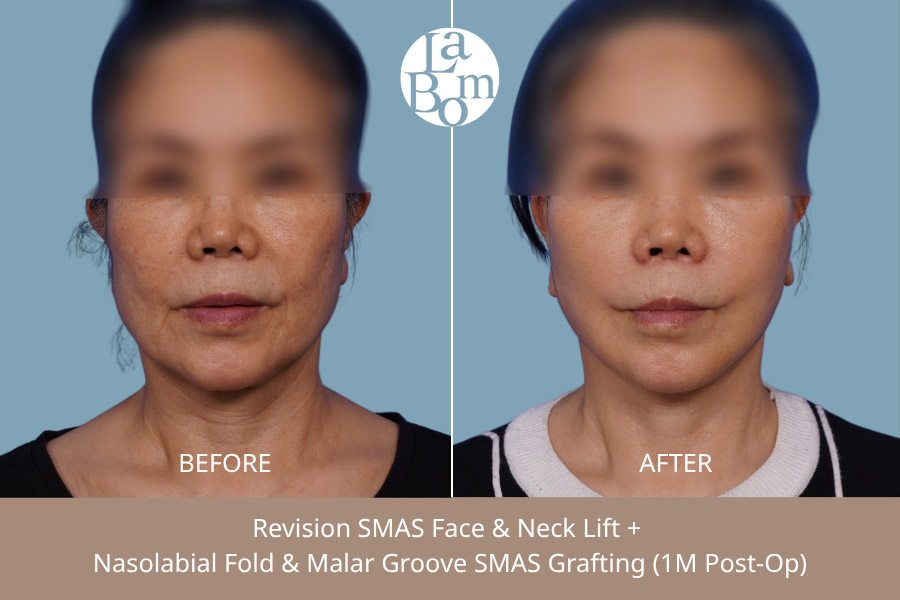
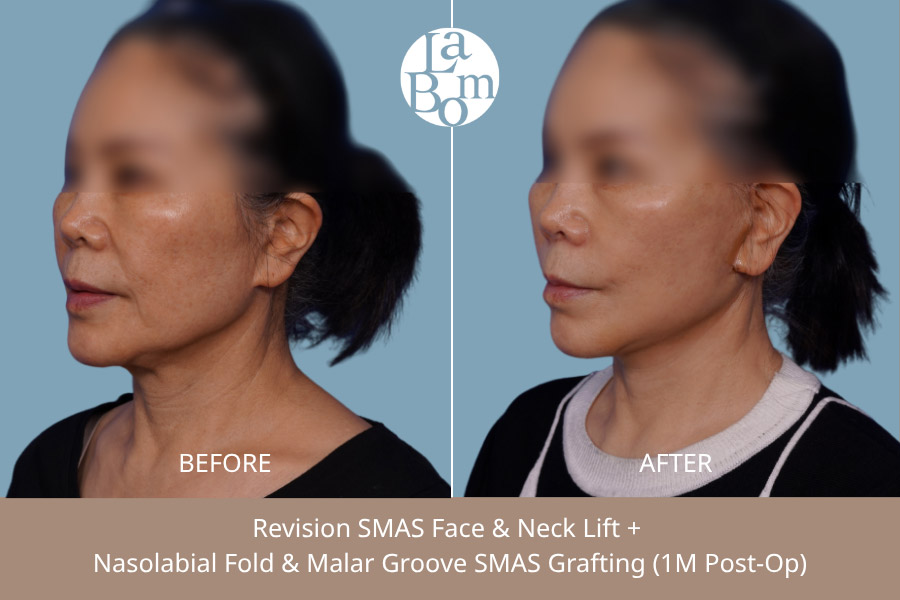
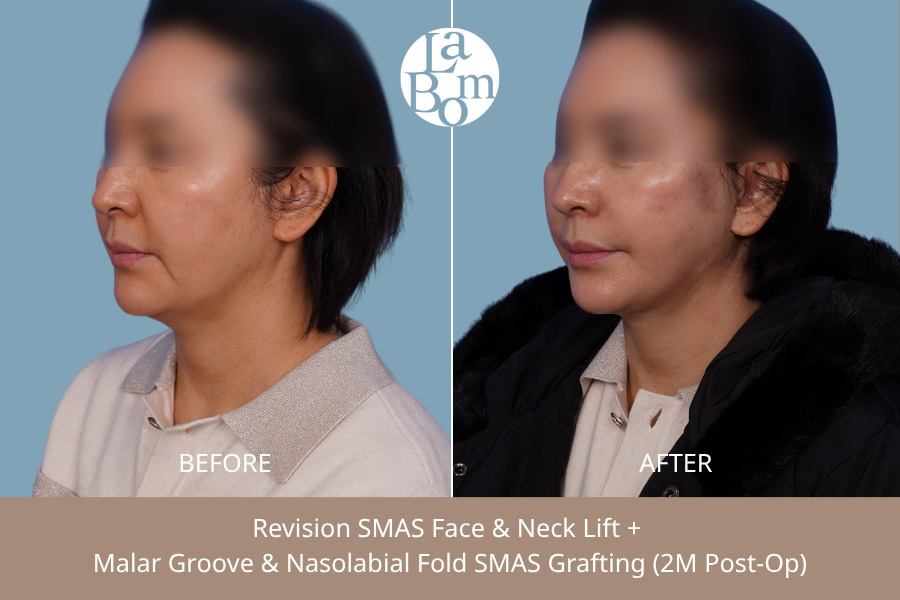
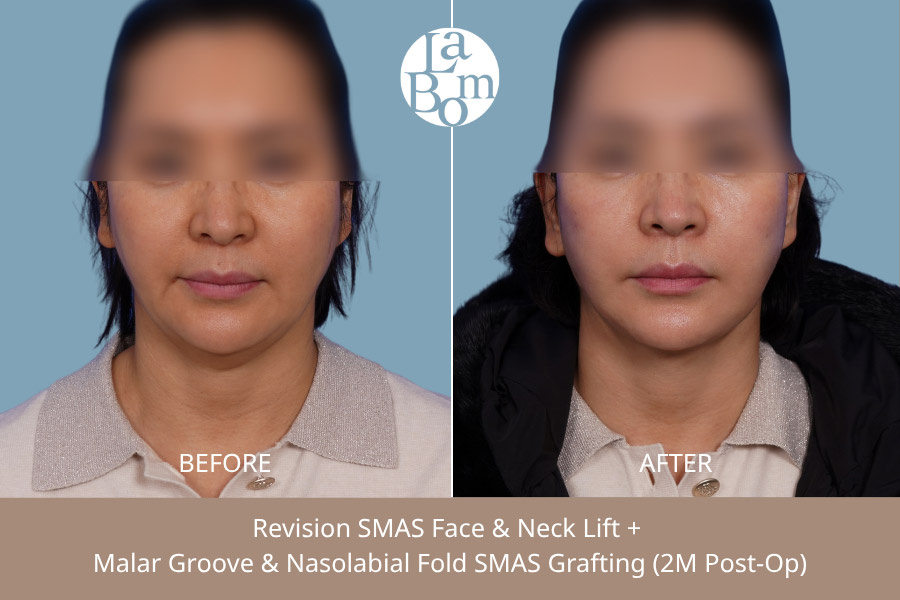
Our results
Before & After
Begin Your Consultation Today
Online consultation at LABOM is quick and easy, and completely free. Simply fill in our consultation form with all your details, and a staff member will get back to you as soon as possible to further discuss your needs and goals.